Is Your Data AI-Ready? A Practical Guide for South African Organisations
Big Data SA Team · 28 October 2026 · 7 min read
Last updated
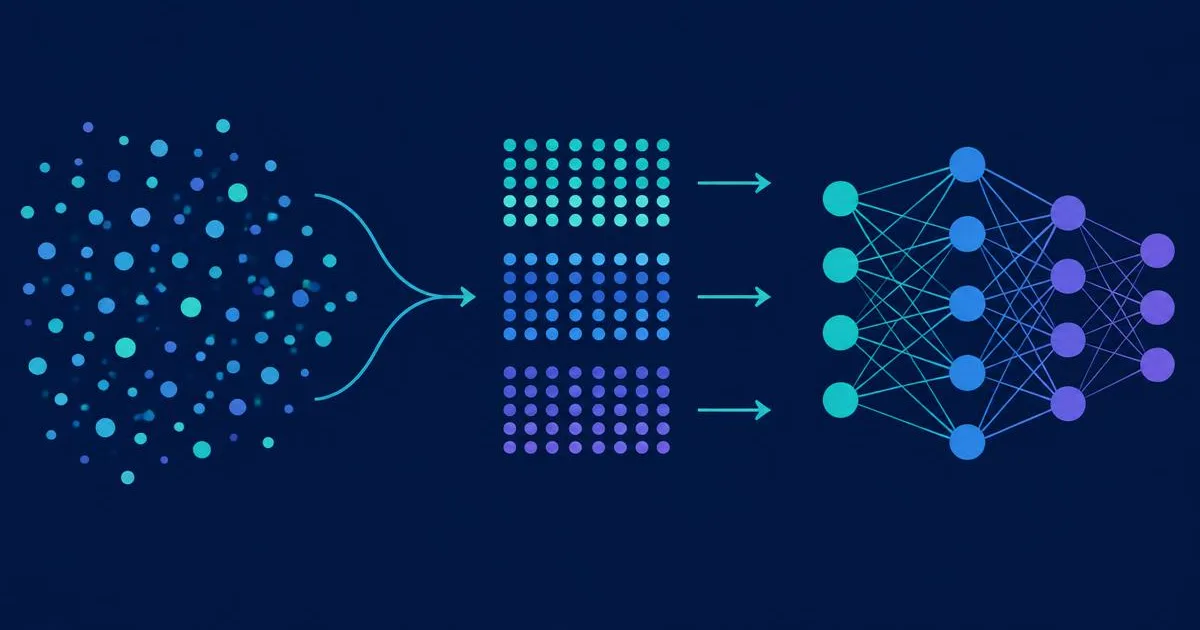
Almost every South African organisation we speak to has an AI ambition. Far fewer have the data to support it. Honestly, most AI projects don't fail because of the model. They fail because the data feeding it is incomplete, inconsistent, inaccessible or not governed well enough to use safely. This guide explains what 'AI-ready data' actually means and how to get there without trying to fix everything at once.
What 'AI-ready' actually means
AI-ready data is data that is accurate, accessible, understood and governed. Put simply:
- It is correct and complete enough for the decision you want to make.
- It can be reached by the right people and systems without manual exports.
- It is documented, so people know what each field means and where it came from.
- It is used lawfully and securely, with appropriate access controls - important under POPIA.
Notice that none of this is about AI specifically. The same qualities make reporting, analytics and day-to-day operations better. That's good news: investment in data readiness pays off even before the first model goes live.
Start with data quality
Generative AI and machine learning amplify whatever you feed them. Duplicate customers, missing dates, inconsistent product codes and free-text fields full of abbreviations all produce unreliable outputs.
You don't need perfect data, but you do need to know how good it is. A practical approach:
- Pick the data that matters for your first use case - not everything.
- Profile it: completeness, duplicates, valid ranges and freshness.
- Fix at source where possible, so problems don't reappear.
- Automate checks in your pipelines so quality is monitored continuously.
Data observability tools and simple automated tests catch issues before they reach a dashboard or a model.
Build on a modern data platform
AI needs data brought together from many systems - ERP, CRM, finance, operations, documents. Doing that repeatedly with spreadsheets and ad-hoc scripts doesn't scale. A modern data platform provides one governed place for that data.
The leading options each have strengths:
- Microsoft Fabric - a natural fit for organisations already using Microsoft 365 and Power BI.
- Databricks - excellent for large-scale engineering, data science and ML workloads.
- Snowflake - simple to operate and strong for SQL-based analytics and data sharing.
All three can run in or near South African cloud regions. The right choice depends on your skills, licensing and use cases more than on feature lists. Our data engineering team helps organisations choose and build these platforms.
Need a second opinion?
Book a free 30-minute consultation with a senior specialist.
Book a free consultationGovernance and POPIA
AI raises the stakes on governance. A GenAI assistant connected to company documents can surface information to people who were never supposed to see it, if access controls aren't respected. Models trained on personal information must comply with POPIA's conditions - including purpose specification, minimality and security safeguards.
Key governance practices for AI readiness:
- Classify sensitive and personal data so you know what needs extra care.
- Apply least-privilege access, and make sure AI tools inherit those permissions.
- Document data lineage - where data came from and how it was transformed.
- Use enterprise AI services that don't train on your data.
- Keep humans in the loop for decisions that significantly affect people.
Quick-win GenAI use cases
The best first AI projects are narrow, valuable and low-risk. Some that work well for South African organisations:
- Internal knowledge assistants that answer staff questions from policies, procedures and product documents, with sources cited (often called RAG - retrieval-augmented generation).
- Document summarisation for contracts, tenders and reports.
- Customer service support that drafts responses for agents to review.
- Natural-language questions over BI data, layered on trusted Power BI datasets.
- Classic predictive models - churn, demand forecasting and fraud detection - where historical data is already reasonably clean.
A focused 4 to 6 week pilot is usually enough to prove (or disprove) value. Our AI and machine learning service runs these pilots with production in mind from day one.
Why analytics often comes first
If your organisation struggles to produce consistent monthly reports, jumping straight to AI is risky. Trusted analytics forces the hard conversations: which numbers are right, who owns them and how they're defined. Those agreements are exactly what AI needs. Many clients start with a Power BI and analytics project and find their AI use cases become much clearer afterwards.
AI readiness checklist
Score yourself honestly on each item:
- We have identified two or three specific business problems AI could help with.
- The data for those problems is available in a central, governed platform.
- We know the quality of that data and monitor it automatically.
- Key data fields and metrics are documented and agreed.
- Personal information is classified and access is restricted appropriately.
- We have a policy for approved AI tools and how staff may use them.
- We have the skills - internal or partner - to deploy and monitor models.
- Leadership has agreed how success will be measured.
Fewer than five ticks? Focus on foundations first - it will save time and money later. Ready to talk it through? Book a free AI readiness conversation.